




Description
Plate armour had already been in use in Roman times, but the knowledge and skill to make it was lost when Rome fell. For almost a millennium combatants resorted to mail and sometimes armor made of small pieces of iron. Eventually armour began to transition back to plate. The re-introduction of plate armour to enchance mail was incremental. At first only the most vulnerable areas got extra protection.
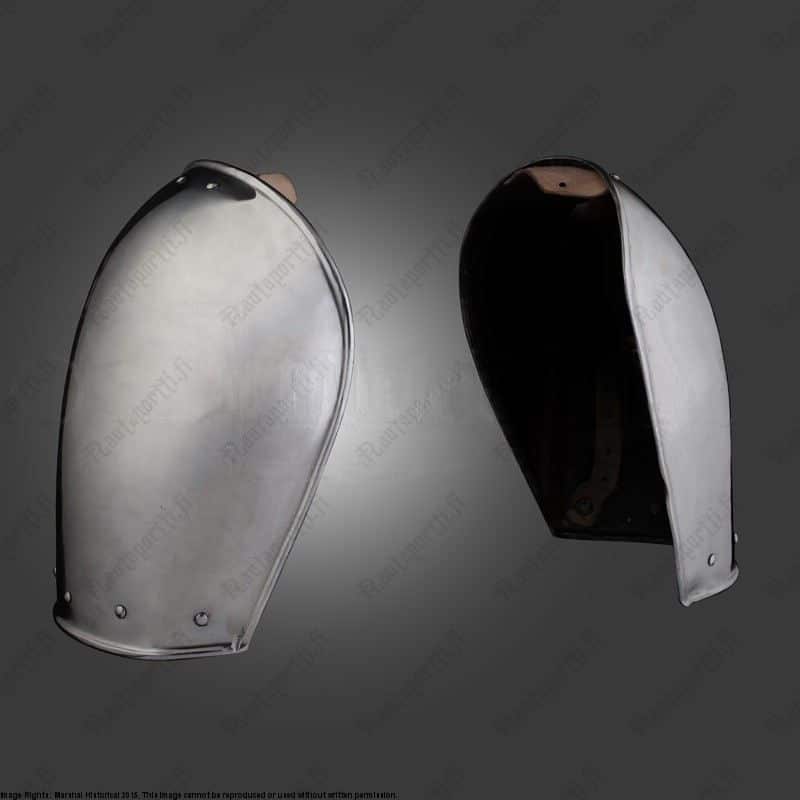
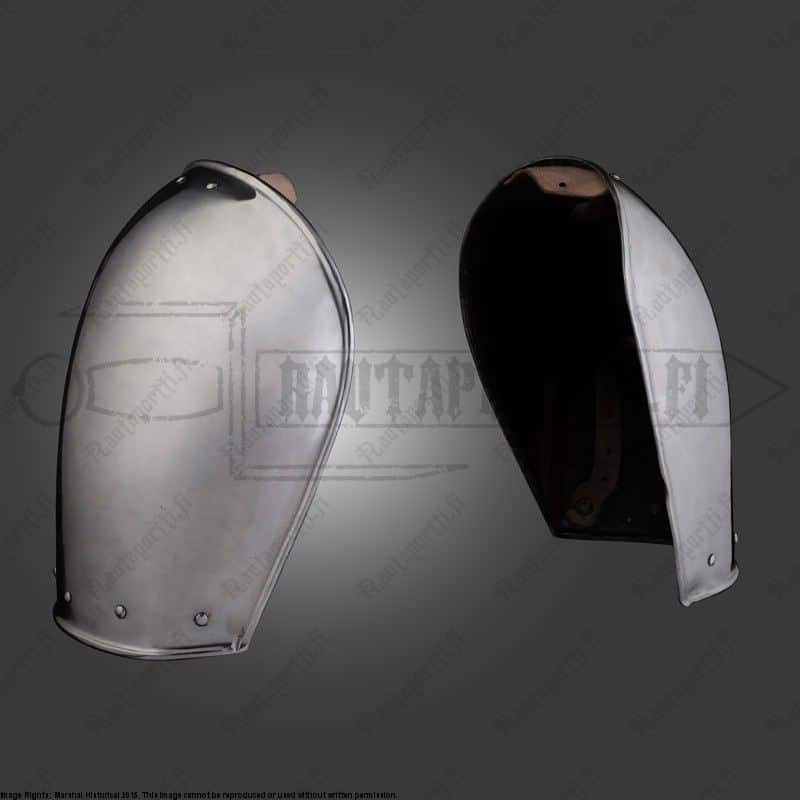
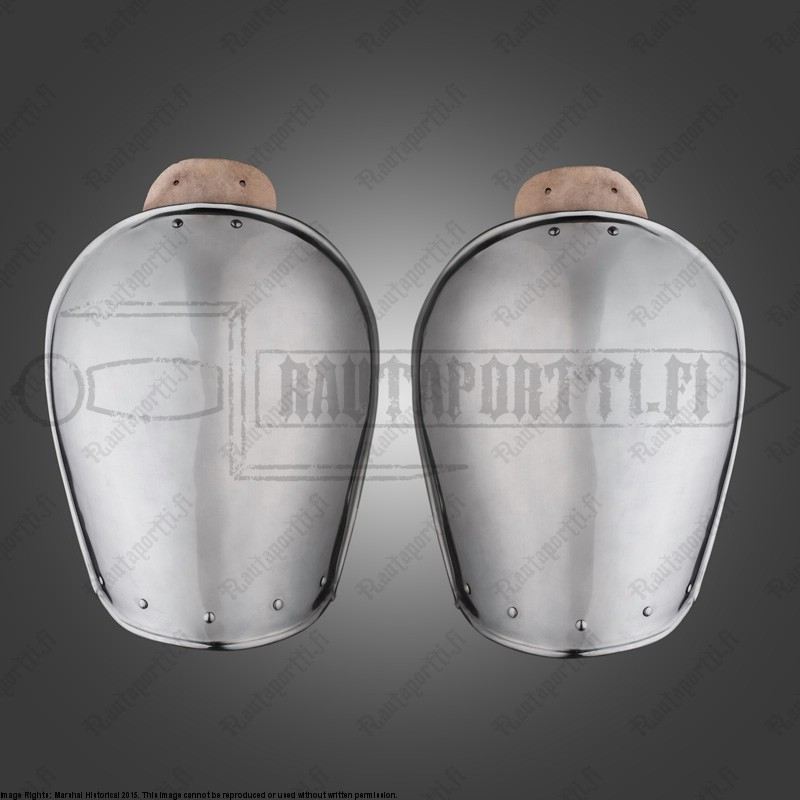
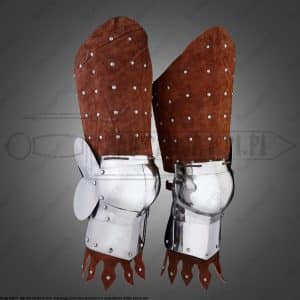
Shoulders were some of the first parts to be protected, first with simple rondels or besagews attached to the mail, then the important joints got protective cups, such as these spaulders, as well as couters for elbows and poleyns for knees by the late 13th C. These very simple spaulders date to the later part of the 14th C. These spaulders don’t hinder the movement of the arms and as there are no moving parts the maintenance needed is minimal. The spaulders are attached to a gambeson or an arming jack or to your mail-shirt with laces through the leather patch at the top. Steel thickness may vary due to the handcrafted methods used in manufacturing.
- Important joints were protected with simple plate parts by the late 13th century
- Historically accurate approx. from 1350 till 1425
- The spaulder is approx.. 29 cm long and 31 cm wide at the widest part, measured along the surface
- Made of 1.6 mm steel
- Manufacturer: Marshall Historical




Marko Korpela –
Yksinkertainen on kaunista. Haittapuolena limittyviin olkasuojiin verrattuna se että kättä nostettaessa kolisevat usein kypärään.