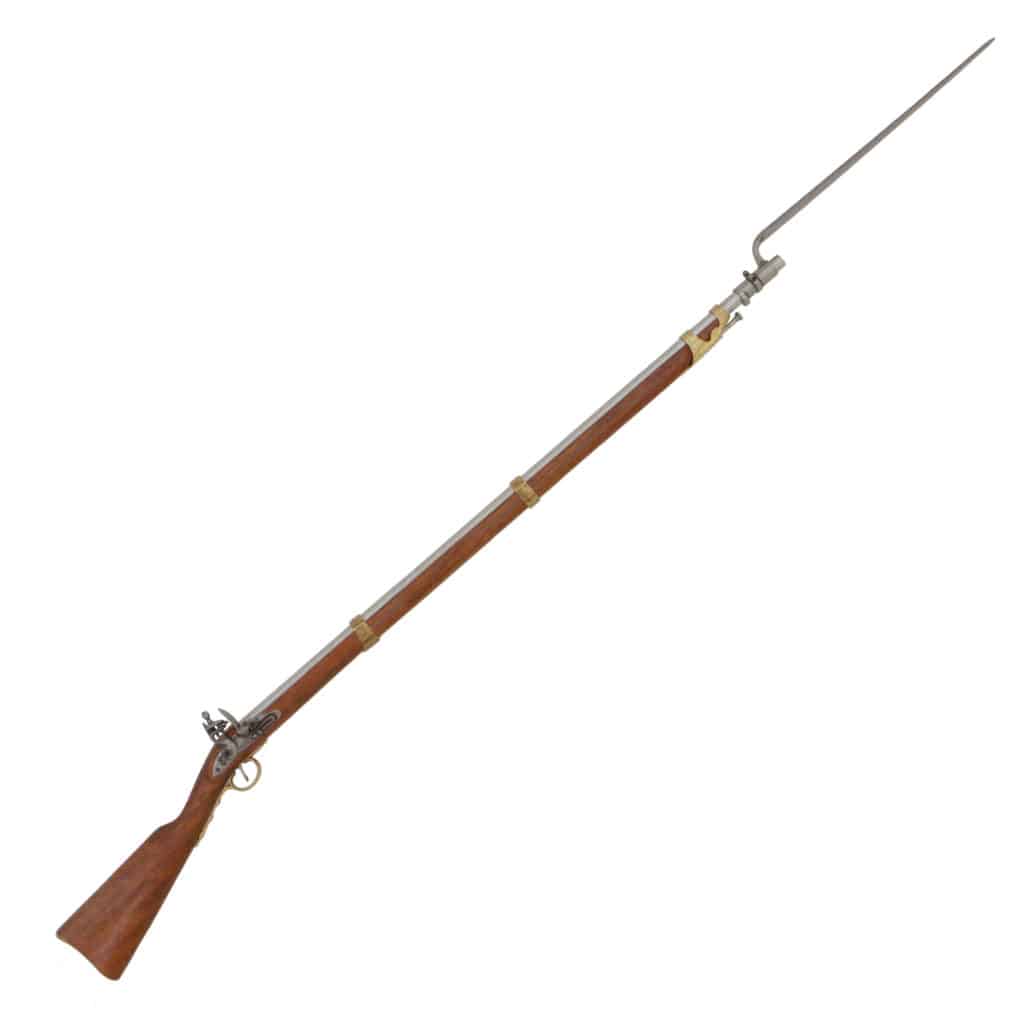
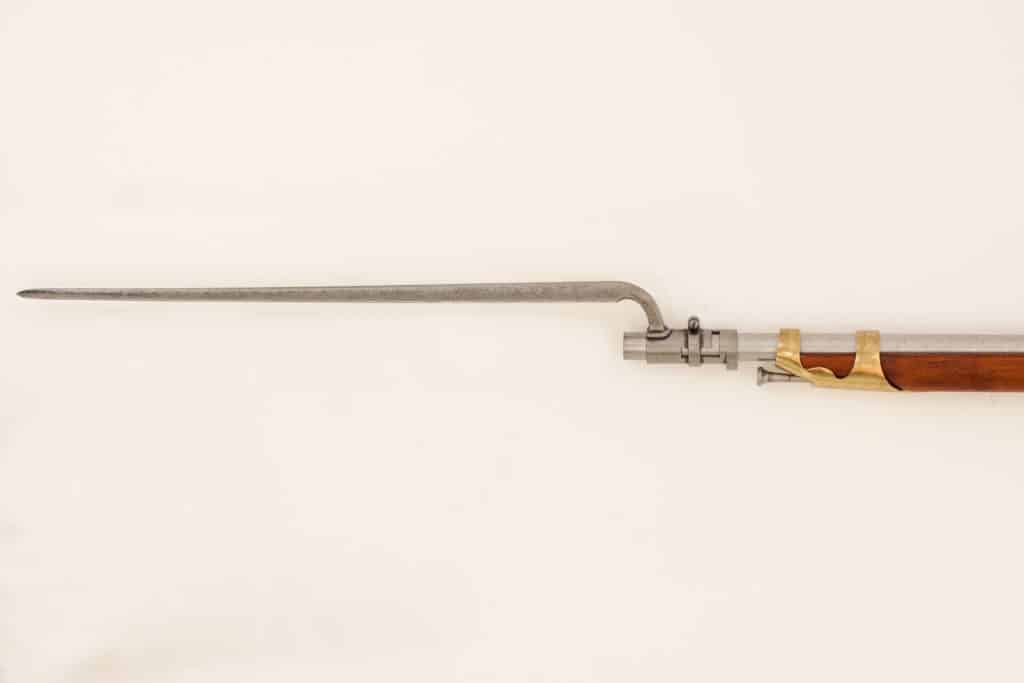
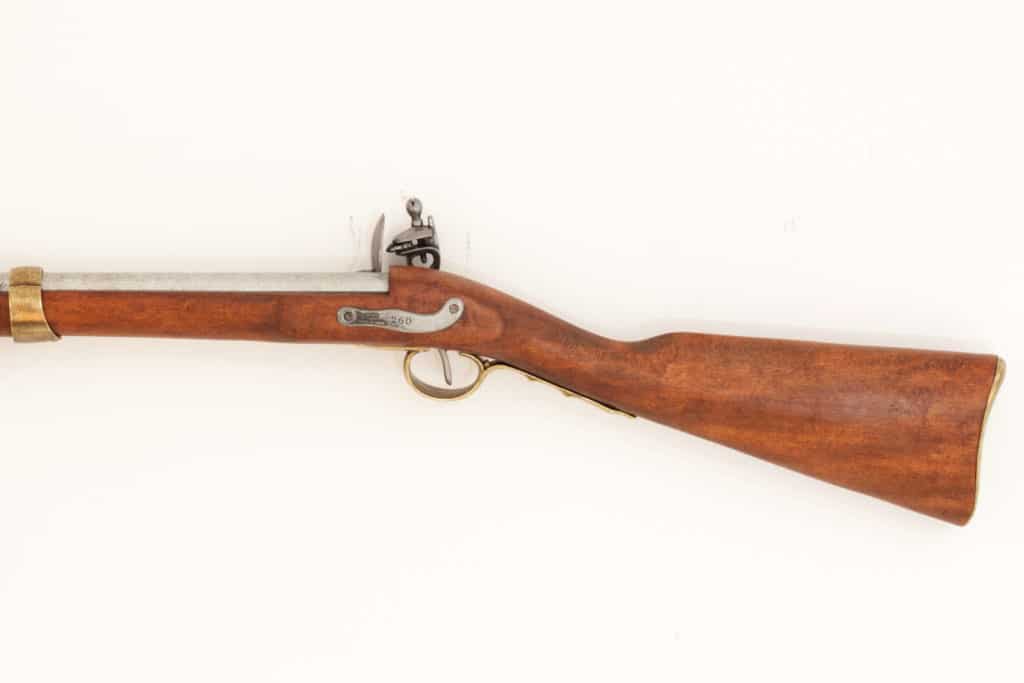
Description
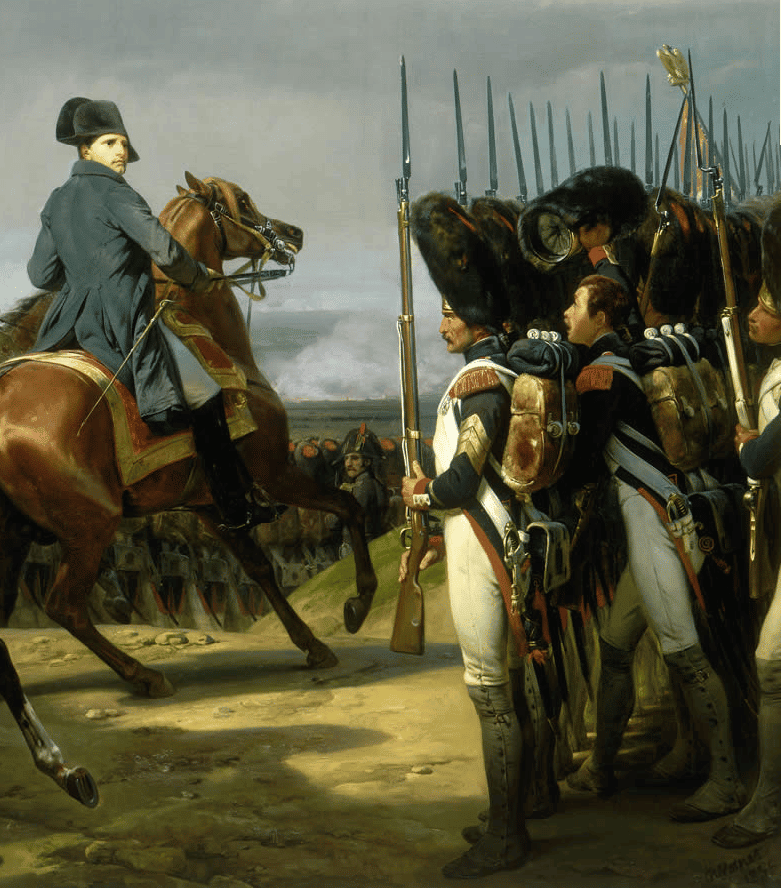
The Charleville Musket was, along with the English Brown Bess, the most common weapon of the 18th and early 19th centuries. It was involved in most conflicts, after all Britain and France were the two largest and most powerful empires with large colonies, both fighting for influence in both the Old and New Worlds. In Europe, this musket was in use during the French Revolution and the Napoleonic Wars (1803-1815), when French troops rolled from one battlefield to another, conquering country after another.
The Charleville musket was the first standard musket of the French infantry, and was in use from 1717 onward. The last pieces were made in the 1840s. Although the name of the weapon should be French infantry musket or French model musket, in practice the weapon came to be called the Charleville Musket after the arms factory in Charleville during the American War of Independence (1775-1783), where French muskets were standard equipment for American soldiers. The Charleville musket left an indelible mark on the Americans and copies began to be made locally. The Springfield Model 1795 Musket and the subsequent improved models 1812 and 1816 are externally replicas of this weapon and still played an important part in the American Civil War (1861-1865).
Of course, Charleville muskets were made not only in Charleville but also in other gun factories in France, but the name of the gun remained. The weapon, which was in production for a long time, can be found in several different versions, and new small improvements may have been made every few years. In appearance and style, this replica corresponds to the model 1763 and later versions. The 1777 model, the Modèle 1777, was the most popular and a total of 7 million pieces were produced, more than any other weapon before the time of mass production in World War I. The Charleville 1777 musket was copied and made in Austria, Belgium and Prussia, and the Russian Model 1808 musket was also a fairly straight copy of this classic.
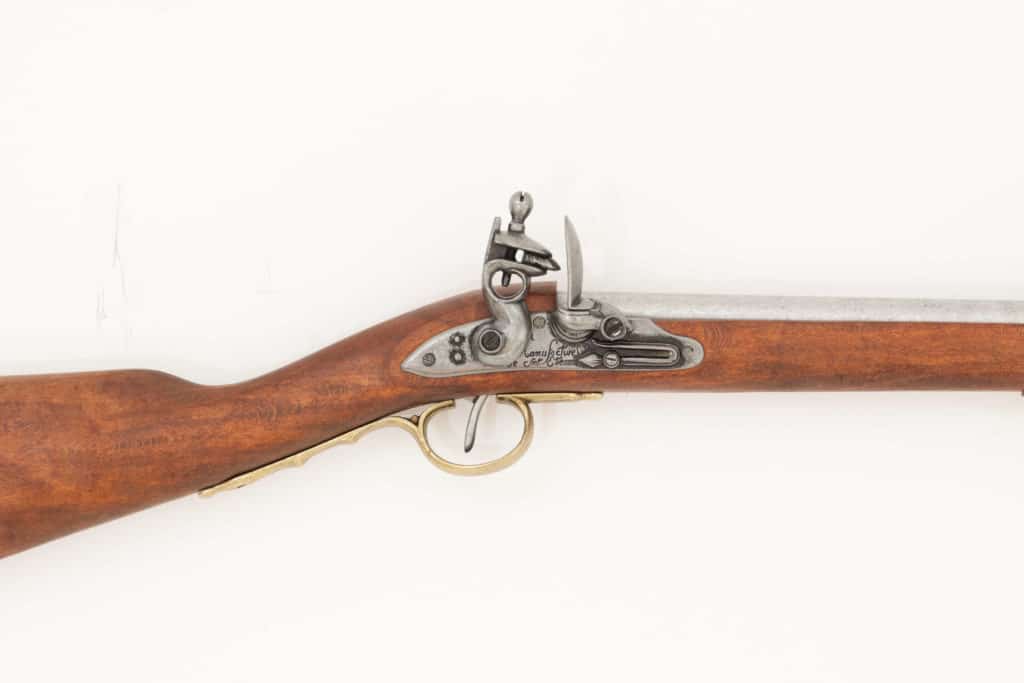
When loading a flintlock gun, black powder from a gunpowder horn was first poured into the barrel or a ready-made powder cartridge wrapped in paper was inserted into the barrel. A bullet, typically a ball cast from lead, was pushed after the powder. The bullet was pushed to the bottom of the barrel with a long ramrod, which made the charge a tight package at the back of the barrel. When the trigger was pulled, the hammer swung forward and the flint attached to the jaws struck the frizzen. The sparks generated by the impact ignited the ignition powder in the pan. This “flash in the pan”, in turn, burned to the barrel side of the gun along a small channel, igniting the actual gunpowder charge which propelled the bullet to its target.
The Charleville musket had a smooth .69 caliber barrel, meaning the gun fired large 17,5 mm diameter lead bullets. A properly trained infantry soldier was able to load and fire three shots per minute. A properly trained shooter was able to hit a human-sized target from a distance of 40-60m and a large enemy front from a distance of 100m. At longer distances the accuracy was more hit-or-miss, as the orbit of the bullet was random over longer distances.
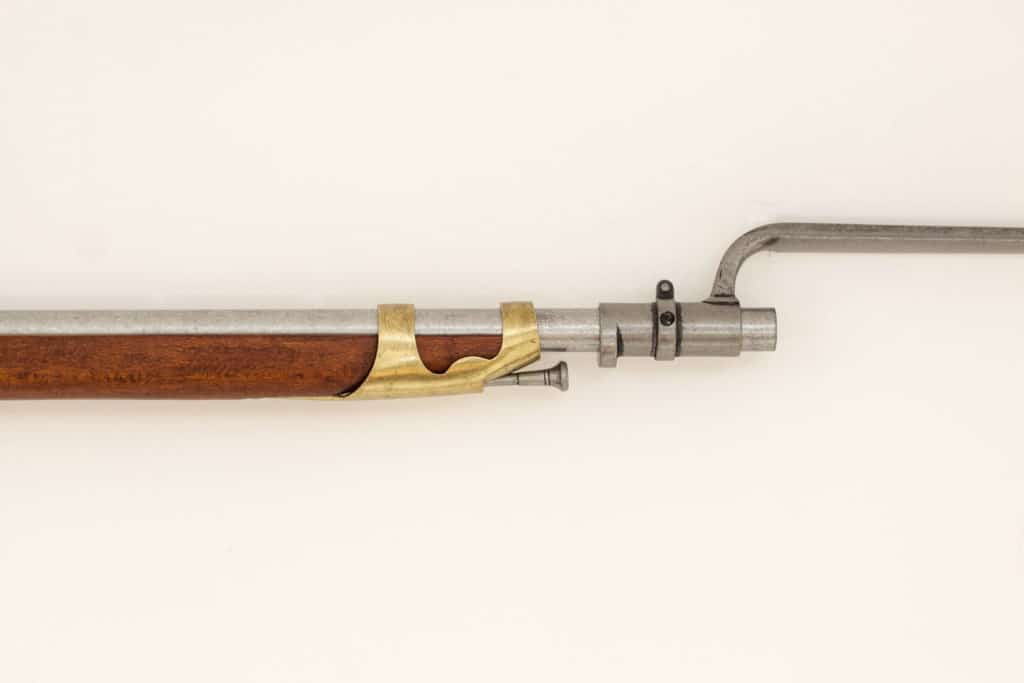
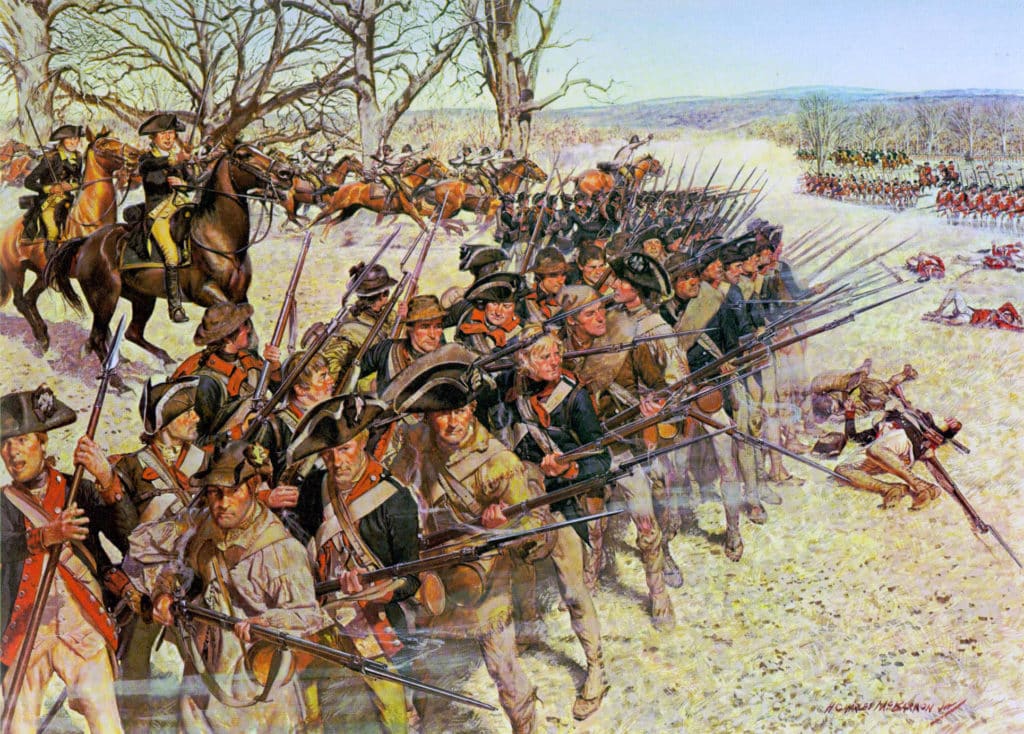
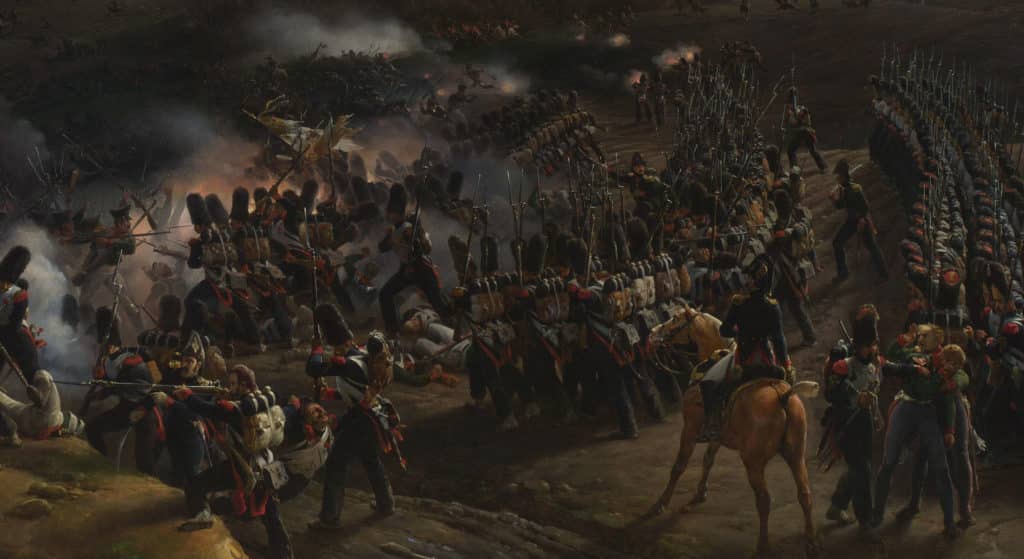
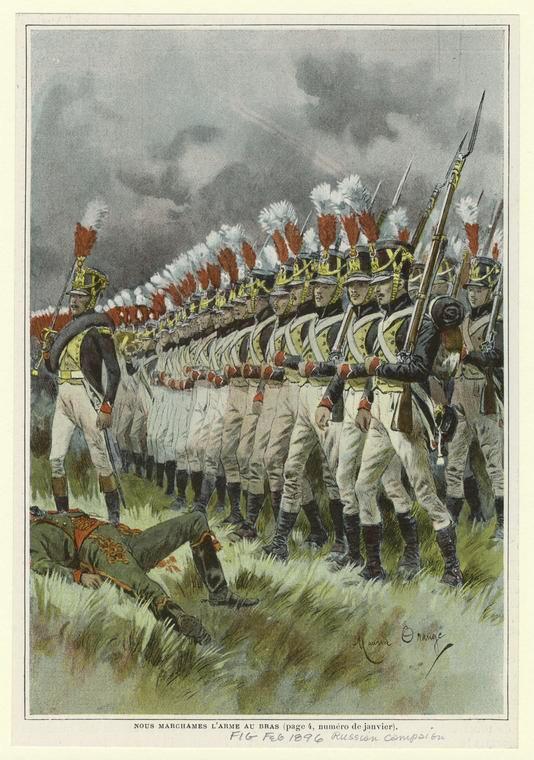
Muskets were not used in war in the same manner as rifles are today, but instead soldiers marched in lines and all fired a large cluster of lead raining down on enemy formations at the same time. There were typically two or three consecutive lines, allowing one line to shoot while the others loaded their muskets. Also, bayonets were not the last line of defense used only in an emergency, but an essential and important part of combat tactics. With the bayonet, the musket formed an effective and reasonably long and usable spear, and after the shots had been fired, the lines typically attacked in a melee quickly. On a battlefield, about a third of the victims fell to the stab and not the bullet.
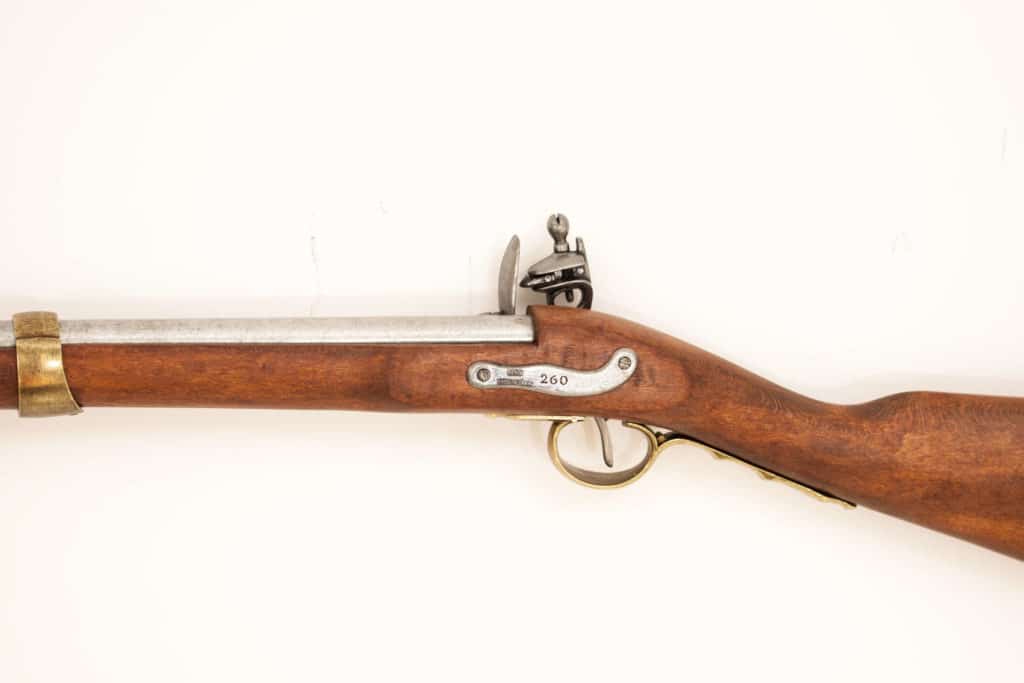
- This gun is an exact replica of the original. The replica matches the original in size and weight. The mechanisms of the weapon are working. The weapon can be cocked and dry fired like a real one. The ramrod is not detachable. The bayonet can be removed and reattached. Due to the materials used, the mechanisms cannot withstand continuous cocking and firing for long periods.
- Genuine wood and cast metal has been used to make this replica weapon. Zamac differs from steel in many respects, so the structure of the gun does not withstand pressure, it cannot be used to fire bullets, nor can it be converted to a functional weapon by any means.
- Replica guns such as this do not require permits in Finland, nor in many other countries. However, since the gun looks real, it should not be carried in public.
- A replica gun is perfect for historical re-enactment, on a theater stage, in film productions, for collectors of historical memorabilia, and as decoration.
- Length: 183 cm
- Weight: 2,8 kg
- Manufacturer: Denix, Spain
Due to the nature of this item please read about shipping options/restrictions if ordering outside Finland. –More information about international shipping-


Reviews
There are no reviews yet.